
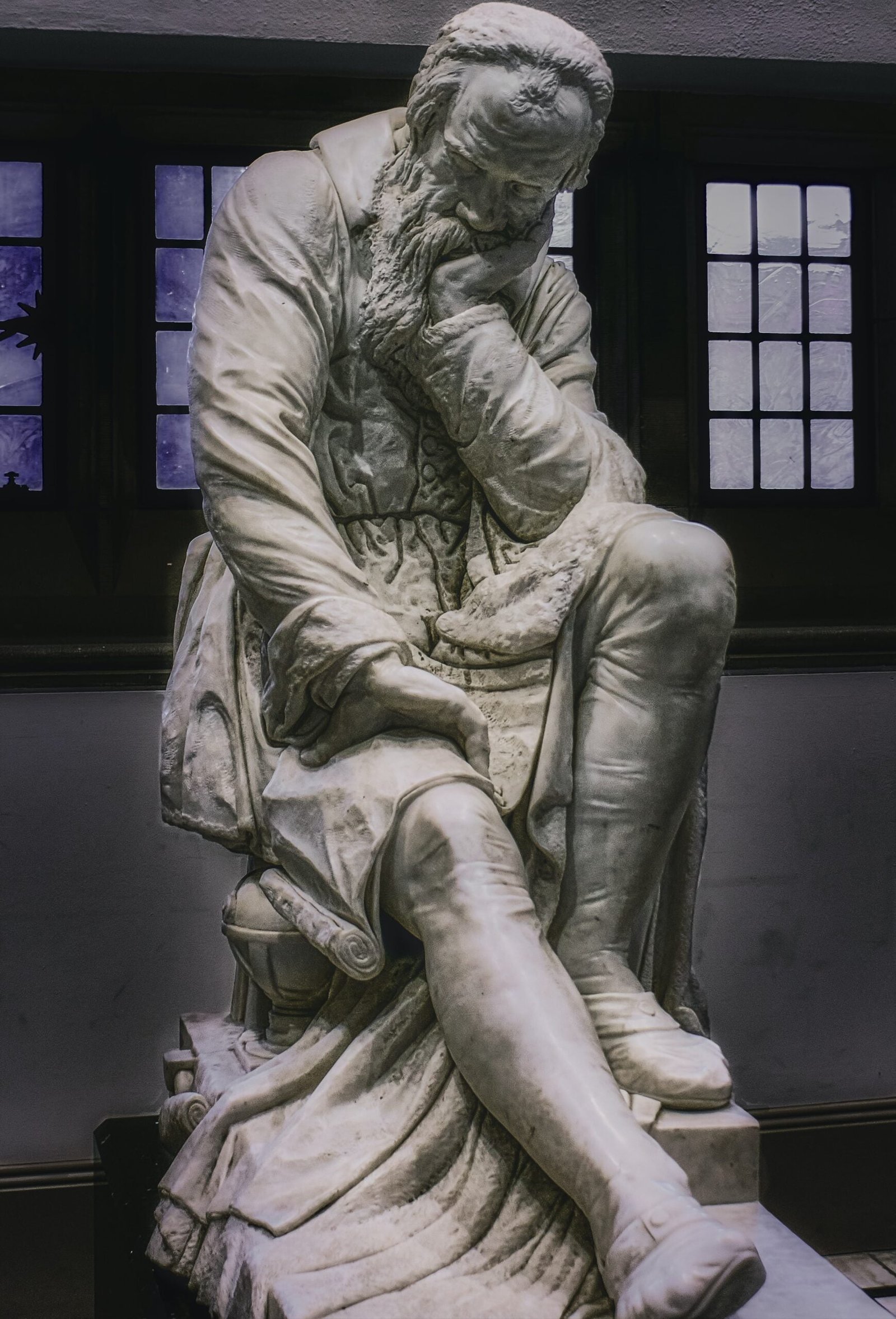
Galileo Galilei, the renowned Italian astronomer, physicist, and mathematician, is often celebrated for his groundbreaking work in the field of astronomy. However, his contributions to the understanding of sound should not be overlooked. In the 17th century, Galileo conducted several experiments that shed light on the nature of sound waves and paved the way for future discoveries in the field of acoustics.
The Pendulum Experiment
One of Galileo’s notable experiments involved the use of a pendulum to study the behavior of sound waves. He observed that when a pendulum swings back and forth, it produces a regular rhythm. Galileo hypothesized that this rhythm could be used to measure the speed of sound.
Galileo’s experiment involved two individuals standing a distance apart, with one person holding a pendulum. The person with the pendulum would swing it back and forth, while the other person would use a stopwatch to measure the time it took for the sound of the pendulum’s movement to reach their ears. By dividing the distance between the two individuals by the time it took for the sound to travel, Galileo was able to estimate the speed of sound.
The Vibrating Rod Experiment
Another experiment Galileo conducted involved the use of a vibrating rod to study the properties of sound. He discovered that the pitch of a sound produced by a vibrating rod depended on its length, thickness, and tension.
In this experiment, Galileo would strike a rod and observe the sound it produced. By varying the length, thickness, and tension of the rod, he noticed that the pitch of the sound changed accordingly. This experiment led him to conclude that the frequency of sound waves was determined by the physical characteristics of the vibrating object.
The Resonance Experiment
Galileo’s exploration of sound also involved studying resonance. Resonance occurs when an object vibrates at its natural frequency in response to an external stimulus. Galileo conducted experiments to better understand this phenomenon.
In one experiment, Galileo struck a tuning fork and placed it near another tuning fork of the same frequency. He observed that the second tuning fork began to vibrate even without direct contact. This led him to conclude that sound waves could transfer energy from one object to another through the air, resulting in resonance.
The Observations on Musical Intervals
Galileo’s experiments with sound also extended to the study of musical intervals. He noticed that when two strings of different lengths were plucked, the resulting sound produced a harmonious or discordant tone depending on the ratio of their lengths.
Galileo’s observations on musical intervals laid the foundation for the understanding of consonance and dissonance in music. His experiments helped to establish the mathematical relationship between musical notes and the physical properties of vibrating strings.
The Legacy of Galileo’s Sound Experiments
Galileo Galilei’s experiments with sound in the 17th century significantly contributed to the field of acoustics and our understanding of sound waves. His work laid the groundwork for future advancements in the study of sound, leading to the development of modern musical instruments, sound recording technology, and the science of acoustics.
Galileo’s innovative approach to scientific inquiry and his meticulous observations continue to inspire scientists and researchers to this day. His experiments with sound serve as a testament to his intellectual curiosity and his unwavering commitment to unraveling the mysteries of the natural world.
In conclusion, Galileo Galilei’s experiments with sound in the 17th century were instrumental in advancing our understanding of sound waves and their properties. His work revolutionized the field of acoustics and left a lasting impact on the scientific community.
Leave a Reply